Showing posts with label charities. Show all posts

Wednesday, April 6, 2011

Wildwood owls in flight

The keeper team at Wildwood have been busy training two of our tawny owls to take part in flying displays at the park. After a number of practice sessions behind the scenes the birds have now moved into the woodland areas of the park for training.

The owls, named Falcor and Gimli, have been training in private for a number of months and are now ready to practice flying in the public areas to get them used to flying with visitors around.

Keeper Chris Jewell said “It takes a while to train the owls to fly to the glove as they’re not generally receptive to training and are easily distracted, but we are taking it at a steady pace for the birds and they are coming on very well. We have moved the practice area into the park and so far the customers who have seen the birds in flight have been delighted.”

As well as getting the birds ready for organised displays the training is also a great way to keep the owls both physically and mentally fit, “not only is this the perfect way to exercise the owls, learning to fly to a glove gives them discipline and keeps them entertained” said Chris.

Owls are amongst the most beautiful and iconic animals to live in the British countryside but sadly most people are unlikely to ever see one except in captivity, and even then it is very rare to see an owl in flight. As a conservation charity, Wildwood is dedicated to educating people about British wildlife in as natural a setting as possible and it is hoped that once the owls have finished their training we will be able to demonstrate their amazing flying skills to thousands of visitors every year.

Wildwood is home to a range of native owls such as tawny, short eared, eagle and barn owls. Training will continue at the park for the next few weeks so if you are lucky enough to be visiting when they are practicing please be sure to stop and enjoy this amazing sight.

Tuesday, March 29, 2011

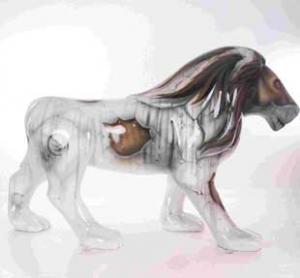
Big cat Kamien the newest addition to Pride in Bournemouth

Big cat Kamien the newest addition to Pride in Bournemouth
3:00pm Saturday 26th March 2011

ARTIST Adam Klodzinski is the latest to make his mark on the Pride in Bournemouth public art event.

Known as Soap, Adam was commissioned by Westbourne gallery Metropolis Art to paint Kamien, its life-size lion statue.

Kamien will be one of at least 50 large lion statues to be displayed across Bournemouth this summer.

All will be auctioned off at the end of the event and the proceeds split between charities Julia’s House and the Born Free Foundation.

“As soon as we learned what the project was about, we signed up,” said gallery co-owner Vicki Angus.

“Adam has captured the majesty of the beast beautifully.

http://www.bournemouthecho.co.uk/news/8924022.Big_cat_Kamien_the_newest_addition_to_Pride_in_Bournemouth/

Sunday, June 6, 2010

The Dog Slum Of Brazil

6th, June 2010

TO the dog slum, or favela, of Caxias do Sul, Brazil, about 1,600 abandoned canines are chained to around 1,000 little dog houses. A farm? An art installation. A fat camp?

No, this is the dog slum run by So Ama, or Just Love, a dog charity.

Says Natasha Oselame, who runs the organisation’s PR:

“We started out with the naivety of wanting to change the world, and the project just kept getting bigger, so unfortunately this is all we have to offer them.”

Them being the dogs and around 200 cats. Of course, the PR is telling us this and showing the photos. So, give generously, if moved. You might argue that bed and baord is pretty high living for a dog.

Brazil’s North Korean community is not being offered special visiting rates – yet…

See photos at
: http://www.anorak.co.uk/249784/strange-but-true/in-pictures-the-dog-slum-of-brazil.html

Tuesday, October 13, 2009

Wildwood Goes Nuts

Wildwood are asking wildlife lovers to help us harvest the autumn nuts that fall on the paths around our unique Woodland Discovery Park!

Unfortunately, the acorns and sweet chestnuts are falling out of the trees faster than Wildwood's animal keepers can collect them, and Wildwood are asking for help collecting them to make sure we have enough to feed our animals this coming winter.

Wildwood's wild boar adore the sweet chestnuts and acorns that fall on the forest floor and our red squirrels can't wait to get their paws on this season's hazel nuts. But they need your help. As a big thank you we are giving away a free children's return ticket, or a special prize for members, for every carrier bag full we receive.

TV celebrity Boris the big wild boar, star of Blue Peter and Sir David Attenborough's Life with Mammals, loves acorns and cannot wait to be fed the acorns that visitors to Wildwood pick up.

As a charity we have to save every penny so we can spend it on our innovative conservation projects, that is why it is so important that we get help to harvest our natural food source.

All children handing in a bag of nuts will be given a FREE ticket to come to Wildwood again.

Wildwood's 'Wildlife Conservation Park' is an ideal day out for all the family where you can come 'nose to nose' with British Wildlife. Wildwood offers its members and visitors a truly inspirational way to learn about the natural history of Britain by actually seeing the wildlife that once lived here, like the wolf, beaver, red squirrel, wild boar and many more.

Wildwood is situated close to Canterbury, just off the A291 between Herne Bay and Canterbury. For more information visit our website at www.wildwoodtrust.org or telephone 0871 782008.

KEEP SAFE!
  1. Don't feed any of the animals. Some of them may bite and if an animal is given the wrong food or too much food it can make them very ill.

  2. Don't eat any of the nuts; they could make you feel very sick!

Top 10 Acorn and Oak Tree Facts

  • Pigs love Acorns and up until recently many farmers allowed their pigs to run through woodlands in the autumn eating this excellent food which helps fatten them up so they can survive the winter.

  • Oak trees don't have acorns until they are at least 50 years old.

  • The Anglo-Saxon name for oak was aik, so the seed was known as aik-com. English oaks bear them on stalks, sessile acorns are stalkless.

  • In a good year a mature oak tree may produce around 50,000 acorns.

  • Oak trees are an important habitat for wildlife and provide a home for more species of wildlife than any other European tree. Squirrels and many birds shelter, feed or nest in the canopy and many insects eat the leaves. Mosses, lichens and algae and insects live on or in the bark, and acorns feed all sorts of animals such as deer, squirrels, rabbits, mice and birds. Even when a tree dies it continues to provide food and shelter for wildlife as it slowly decays. In fact an oak tree is really just like a big wildlife hotel!

  • Oak trees are deciduous which means they lose their leaves in winter. Like other deciduous trees, oaks have wide flat leaves from which water is easily evaporated. In winter when the ground is cold or frozen, it is difficult for trees to take up enough water through their roots, so in autumn as the days become shorter and darker, trees lose their leaves and 'sleep' through the winter. Then in spring as the days become longer and brighter, the tree produces a whole new set of leaves.
  • In May oak trees also produce two types of flowers. Male flowers hang in long catkins from the twigs and female flowers appear at the tips of the twigs. Pollen from the male flowers is carried to the female flowers by the breeze and the female flowers eventually turn into seeds called acorns. By the autumn the acorns are ripe and fall to the ground. Many are eaten by animals such as deer, squirrels, mice and rabbits and by birds such as jays and rooks. But hopefully some will land or be dropped on the soil and germinate the following spring.

    An oak seedling may reach a height of 30cm in its first year but it has a long way to go! Oak trees are very long lived and can live for 1000 years or more!

  • There are two species of oak native to Britain:
    • The English Oak (Quercus robur) is a massive tree and can grow up to 40 metres in height. It has a short trunk, long branches and a huge crown. The leaves have 4 or 5 lobes (rounded wiggles) on each side and don't have stalks. The acorns of English oaks are attached to the twig by long stalks.

    • The Sessile Oak (Quercus petraea) can also grow up to about 40 metres in height. It has a longer trunk than the English Oak. and a fan shaped crown. Its leaves are also a rounded wiggly shape in outline, but unlike the English oak, leaves of the sessile oak grow on stalks. The acorns are stubbier and they don't have stalks.

Top 10 conker facts

  • In some countries, like Corsica, where wheat does not grow well their staple food is a flour made from chestnuts (sweet chestnuts and not horse chestnuts) which can be baked into cakes and bread.
  • A conker is the seed of the horse chestnut tree (not the sweet chestnut tree where we get edible chestnuts from). It is a hard brown nut which is found in a prickly casing. They fall from the tree when they are ripe during the autumn months. Conkers is the name given to a game played between two people at a time.

  • The World Conker Championships take place at Ashton near Peterborough every October. 'Conker' is a corruption of the word 'Conquerer'.

  • Conkers are eaten by deer and cattle but not necessarily by horses. The horse part of the name means they are unsuitable for human consumption.

  • The horse chestnut is a native in the Balkan Peninsula. (This peninsula is in SE Europe, bounded by the Adriatic, the Aegean and the Black Seas.)

  • Britain is believed to be the only country in the world where the game of conkers is traditionally played with horse chestnuts in the autumn.

Prepare your conker for playing

The best conkers to play with are uncracked, firm and symmetrical. Make a hole through the middle of your chosen conker. Thread a strong piece of string about 25cm long, through the hole and tie a knot at one end, so that it doesn't pull through.

Each player has a conker hanging on its string. Players take turns at hitting their opponent's conker. If you are the one whose conker is to be hit first, let it hang down from the string which is wrapped round your hand. The conker is held at the height your opponent chooses and is held perfectly still.

Your opponent, the striker, wraps his conker string round his hand just like yours. He then takes his conker in the other hand and draws it back for the strike. Releasing the conker he swings it down by the string held in the other hand and tries to hit his opponents conker (yours) with it.

If he misses he is allowed up to two further goes.

If the strings tangle, the first player to call "strings" gets an extra shot.

If a player drops his conker, or it is knocked out of his hand the other player can shout 'stamps' and jump on it; but should its owner first cry 'no stamps' then the conker, hopefully, remains intact.

The game goes on in turns until one or other of the two conkers is completely destroyed.

Hints on how to make your conkers harder

  • Soak your conker in vinegar.

  • Bake your conker in the oven.

  • Use an old conker from previous years.

Wildwood Goes Nuts

Wildwood are asking wildlife lovers to help us harvest the autumn nuts that fall on the paths around our unique Woodland Discovery Park!

Unfortunately, the acorns and sweet chestnuts are falling out of the trees faster than Wildwood's animal keepers can collect them, and Wildwood are asking for help collecting them to make sure we have enough to feed our animals this coming winter.

Wildwood's wild boar adore the sweet chestnuts and acorns that fall on the forest floor and our red squirrels can't wait to get their paws on this season's hazel nuts. But they need your help. As a big thank you we are giving away a free children's return ticket, or a special prize for members, for every carrier bag full we receive.

TV celebrity Boris the big wild boar, star of Blue Peter and Sir David Attenborough's Life with Mammals, loves acorns and cannot wait to be fed the acorns that visitors to Wildwood pick up.

As a charity we have to save every penny so we can spend it on our innovative conservation projects, that is why it is so important that we get help to harvest our natural food source.

All children handing in a bag of nuts will be given a FREE ticket to come to Wildwood again.

Wildwood's 'Wildlife Conservation Park' is an ideal day out for all the family where you can come 'nose to nose' with British Wildlife. Wildwood offers its members and visitors a truly inspirational way to learn about the natural history of Britain by actually seeing the wildlife that once lived here, like the wolf, beaver, red squirrel, wild boar and many more.

Wildwood is situated close to Canterbury, just off the A291 between Herne Bay and Canterbury. For more information visit our website at www.wildwoodtrust.org or telephone 0871 782008.

KEEP SAFE!
  1. Don't feed any of the animals. Some of them may bite and if an animal is given the wrong food or too much food it can make them very ill.

  2. Don't eat any of the nuts; they could make you feel very sick!

Top 10 Acorn and Oak Tree Facts

  • Pigs love Acorns and up until recently many farmers allowed their pigs to run through woodlands in the autumn eating this excellent food which helps fatten them up so they can survive the winter.

  • Oak trees don't have acorns until they are at least 50 years old.

  • The Anglo-Saxon name for oak was aik, so the seed was known as aik-com. English oaks bear them on stalks, sessile acorns are stalkless.

  • In a good year a mature oak tree may produce around 50,000 acorns.

  • Oak trees are an important habitat for wildlife and provide a home for more species of wildlife than any other European tree. Squirrels and many birds shelter, feed or nest in the canopy and many insects eat the leaves. Mosses, lichens and algae and insects live on or in the bark, and acorns feed all sorts of animals such as deer, squirrels, rabbits, mice and birds. Even when a tree dies it continues to provide food and shelter for wildlife as it slowly decays. In fact an oak tree is really just like a big wildlife hotel!

  • Oak trees are deciduous which means they lose their leaves in winter. Like other deciduous trees, oaks have wide flat leaves from which water is easily evaporated. In winter when the ground is cold or frozen, it is difficult for trees to take up enough water through their roots, so in autumn as the days become shorter and darker, trees lose their leaves and 'sleep' through the winter. Then in spring as the days become longer and brighter, the tree produces a whole new set of leaves.
  • In May oak trees also produce two types of flowers. Male flowers hang in long catkins from the twigs and female flowers appear at the tips of the twigs. Pollen from the male flowers is carried to the female flowers by the breeze and the female flowers eventually turn into seeds called acorns. By the autumn the acorns are ripe and fall to the ground. Many are eaten by animals such as deer, squirrels, mice and rabbits and by birds such as jays and rooks. But hopefully some will land or be dropped on the soil and germinate the following spring.

    An oak seedling may reach a height of 30cm in its first year but it has a long way to go! Oak trees are very long lived and can live for 1000 years or more!

  • There are two species of oak native to Britain:
    • The English Oak (Quercus robur) is a massive tree and can grow up to 40 metres in height. It has a short trunk, long branches and a huge crown. The leaves have 4 or 5 lobes (rounded wiggles) on each side and don't have stalks. The acorns of English oaks are attached to the twig by long stalks.

    • The Sessile Oak (Quercus petraea) can also grow up to about 40 metres in height. It has a longer trunk than the English Oak. and a fan shaped crown. Its leaves are also a rounded wiggly shape in outline, but unlike the English oak, leaves of the sessile oak grow on stalks. The acorns are stubbier and they don't have stalks.

Top 10 conker facts

  • In some countries, like Corsica, where wheat does not grow well their staple food is a flour made from chestnuts (sweet chestnuts and not horse chestnuts) which can be baked into cakes and bread.
  • A conker is the seed of the horse chestnut tree (not the sweet chestnut tree where we get edible chestnuts from). It is a hard brown nut which is found in a prickly casing. They fall from the tree when they are ripe during the autumn months. Conkers is the name given to a game played between two people at a time.

  • The World Conker Championships take place at Ashton near Peterborough every October. 'Conker' is a corruption of the word 'Conquerer'.

  • Conkers are eaten by deer and cattle but not necessarily by horses. The horse part of the name means they are unsuitable for human consumption.

  • The horse chestnut is a native in the Balkan Peninsula. (This peninsula is in SE Europe, bounded by the Adriatic, the Aegean and the Black Seas.)

  • Britain is believed to be the only country in the world where the game of conkers is traditionally played with horse chestnuts in the autumn.

Prepare your conker for playing

The best conkers to play with are uncracked, firm and symmetrical. Make a hole through the middle of your chosen conker. Thread a strong piece of string about 25cm long, through the hole and tie a knot at one end, so that it doesn't pull through.

Each player has a conker hanging on its string. Players take turns at hitting their opponent's conker. If you are the one whose conker is to be hit first, let it hang down from the string which is wrapped round your hand. The conker is held at the height your opponent chooses and is held perfectly still.

Your opponent, the striker, wraps his conker string round his hand just like yours. He then takes his conker in the other hand and draws it back for the strike. Releasing the conker he swings it down by the string held in the other hand and tries to hit his opponents conker (yours) with it.

If he misses he is allowed up to two further goes.

If the strings tangle, the first player to call "strings" gets an extra shot.

If a player drops his conker, or it is knocked out of his hand the other player can shout 'stamps' and jump on it; but should its owner first cry 'no stamps' then the conker, hopefully, remains intact.

The game goes on in turns until one or other of the two conkers is completely destroyed.

Hints on how to make your conkers harder

  • Soak your conker in vinegar.

  • Bake your conker in the oven.

  • Use an old conker from previous years.

Sunday, October 11, 2009

Woman wins inheritance battle after parents left £2 million farm to RSPCA

A university lecturer has won a three-year legal battle to inherit her parents’ £2 million farm which they had bequeathed to the RSPCA.

By Paul Stokes
Published: 6:42PM BST 09 Oct 2009

Christine Gill, 59, claimed that her late father coerced her mother into making a will which cut her out and left everything to the animal charity.

She described yesterday’s ruling as a "great relief".

The RSPCA said it had been legally obliged to contest the case. It said Dr Gill had rejected an offer made just before the trial was due to start a year ago of £650,000 plus costs to settle the matter.

It was "concerned at any implications this could have for charities and other groups".

During previous High Court hearings in Leeds, judges heard how Dr Gill’s father, John Gill was a "bully" and "domineering" with an explosive character.

He and his wife Joyce made wills in 1993 in which they left 287-acre Potto Carr Farm, near Northallerton, North Yorkshire, to each other and then to the RSPCA.

Mr Gill died in 1999 and his wife, who was described as eccentric and with "an avowed dislike" of the charity, seven years later. Both were 82. Their only child, Dr Gill, a Leeds University statistics lecturer, had spent most of her spare time helping out voluntarily at the farm for more than 30 years.

She and her husband Andrew Baczkowski moved into a nearby property and Dr Gill received repeated assurances that she would inherit the estate when her parents died.

She only became aware of the will on the death of her mother who stated that no provision was being made for her daughter "because I feel she has been well provided for by me over a long period of time".

Deputy High Court Judge James Allen QC found that Mrs Gill had been coerced by her husband into making the will against her wishes and it would be "unconscionable" for their daughter not to inherit.

Dr Gill said: "The will was not just, there was nothing right about it, it should never have been made and I’m not sure it was made with the intention of it being carried through.

"Mum had no time for the RSPCA."

http://www.telegraph.co.uk/news/uknews/6284625/Woman-wins-inheritance-battle-after-parents-left-2-million-farm-to-RSPCA.html

Woman wins inheritance battle after parents left £2 million farm to RSPCA

A university lecturer has won a three-year legal battle to inherit her parents’ £2 million farm which they had bequeathed to the RSPCA.

By Paul Stokes
Published: 6:42PM BST 09 Oct 2009

Christine Gill, 59, claimed that her late father coerced her mother into making a will which cut her out and left everything to the animal charity.

She described yesterday’s ruling as a "great relief".

The RSPCA said it had been legally obliged to contest the case. It said Dr Gill had rejected an offer made just before the trial was due to start a year ago of £650,000 plus costs to settle the matter.

It was "concerned at any implications this could have for charities and other groups".

During previous High Court hearings in Leeds, judges heard how Dr Gill’s father, John Gill was a "bully" and "domineering" with an explosive character.

He and his wife Joyce made wills in 1993 in which they left 287-acre Potto Carr Farm, near Northallerton, North Yorkshire, to each other and then to the RSPCA.

Mr Gill died in 1999 and his wife, who was described as eccentric and with "an avowed dislike" of the charity, seven years later. Both were 82. Their only child, Dr Gill, a Leeds University statistics lecturer, had spent most of her spare time helping out voluntarily at the farm for more than 30 years.

She and her husband Andrew Baczkowski moved into a nearby property and Dr Gill received repeated assurances that she would inherit the estate when her parents died.

She only became aware of the will on the death of her mother who stated that no provision was being made for her daughter "because I feel she has been well provided for by me over a long period of time".

Deputy High Court Judge James Allen QC found that Mrs Gill had been coerced by her husband into making the will against her wishes and it would be "unconscionable" for their daughter not to inherit.

Dr Gill said: "The will was not just, there was nothing right about it, it should never have been made and I’m not sure it was made with the intention of it being carried through.

"Mum had no time for the RSPCA."

http://www.telegraph.co.uk/news/uknews/6284625/Woman-wins-inheritance-battle-after-parents-left-2-million-farm-to-RSPCA.html

Thursday, May 21, 2009

Blood bank for dogs seeks donors

Britain's first mobile blood bank for dogs is out on the road and looking for donors.
The specially-designed trailer comes complete with weighing scales, waiting room and hydraulic table, reports Sky News.

Dogs visiting the unit can expect dinner afterwards, as well as a goodie bag containing toys to thank them for donating.

The process of giving blood takes five to seven minutes, but owners are advised to allow half-an-hour per visit so their pet can have a check-up.

The blood donations are then stored according to type, and can be held for up to five weeks.

The idea is the brainchild of Pet Blood Bank UK. Over the coming months, it will be visiting veterinary schools across the country.

Executive director Wendy Barnett said: "We have always had a shortage of donors, so it is exactly the same as it is for humans. As soon as the blood comes in, it is straight out again.

"If you went into hospital, you would expect the blood to be there. We are aiming to ensure it's the same for our pets."

The charity was launched in March 2007, and was the first service to collect, process, store and supply pet blood.

http://www.ananova.com/news/story/sm_3330166.html

Tuesday, March 10, 2009

From rhinos to ecosystems: The evolution of charity campaigns

By Matt Ford
For CNN

(CNN) -- Most of us have grown used to conservation charities putting charismatic animals front and center of their fundraising campaigns.

But do NGOs separate the endangered species they campaign to protect from the ecosystems they live in? And, in an increasingly crowded world, how do they factor in human populations or global threats, like climate change?

"An ecosystem approach is critical to achieving sustainable conservation solutions," says Diane Walkington, Head of Species at the World Wildlife Fund.

Despite the organization's iconic links with large mammals such as the panda, their efforts now encompass much more.

"Certainly our roots started in specific species conservation projects," says Walkington. "But today we have a much wider portfolio of work."

The WWF's experience is typical, and in many ways, the two approaches of singles species and ecosystem work seem to have merged.

"I think that people sometimes make too much of the distinction," says Clive Gambler, lecturer in zoology at the University of Oxford. "It many cases you have to do both."

Gambler believes that is often hard to separate elements within an ecosystem and singling one out for conservation over another can sometimes have counter productive results.

However, in some cases it may be possible to isolate issues affecting a particular species.

The Californian Condor, for example, faces one set of threats, including crashing into power lines, while the landscape it inhabits is under different pressures. But, despite this apparent distinction, dealing with the birds in isolation is still difficult.

"There are legal complexities," says Gambler. "At one stage, all the world's California Condors were taken into captivity for protection and breeding, but it was feared this might expose the habitat to destruction -- for example by grazing -- if it no longer had a protected species in it, thus making future reintroduction to the wild problematic."

Underlying all this is the fact that ecosystems are enormously complex and unpicking them can be problematic. Even comparatively rare organisms, such as woodpeckers, may have a disproportionate effect on their environment, for example creating insect habitats by pecking holes in trees.

In response to this increasing awareness of the interrelated nature of the natural world, campaigning groups now work to balance a web of factors that all exert an influence on endangered species.

"Our approach has certainly matured and changed over the decades as scientific knowledge has grown," says the WWF's Walkington. "As well as the fact that threats themselves are growing and changing."

"For example, when we started our conservation efforts in 1961, it wasn't envisaged that, less than 50 years later, we would have reached such an unsustainable consumption level of natural resources such as forests and water, or such a high threat from other factors such as climate change," says Walkington.

"Increasingly conservation needs to include both the traditional species work, along with more widespread campaigns to reduce pollution, the unsustainable consumption of resources and climate change."

Even groups focusing on specific populations take a wider view.

"Of course we recognize the importance of ecosystem work," says Mark Simmonds, Director of Science at the Whale and Dolphin Conservation Society.

"But we also focus on individuals. We are in essence a protectionist organization and believe that every cetacean is precious. We see the two aspects as inseparable; two sides of one coin."

Because of the way humans interact with whales and dolphins, animal welfare is a specific concern. But there are other, global factors affecting the seas, such as climate change, pollution, ozone depletion and acidification, which are also important, and the group works to address them.

"When you look at a relatively enclosed system such as the Black Sea, you can really see what happens when the level of inputs -- pollution, overfishing -- reach a high enough level," says Simmonds.

"There has been an ecosystem 'flip', where comb jellies, also known as sea gooseberries, have replaced fish. This obviously has a huge effect on marine life, particularly cetaceans as top-level predators."

Interconnected issues

A similar lattice of interrelating factors also affects conservationists working on land, and untangling it can be a challenge.

In order to protect Africa's rhinos, NGO Save the Rhino has found it essential to work with and engage local human communities. They are, after all, part of the ecosystem.

"It's actually a misconception that we spend money on rhinos -- we're not taking them for a makeover or anything," says Cathy Dean, Director of save the Rhino. "We spend on the groups that can protect them."

Save the Rhino believe that targeted anti-poaching work is essential. But so too is environmental education, outreach and building alternative economic activity, such as eco tourism, that will benefit both rhinos and the humans that live near them.

One area where this approach is already yielding good results is Laikipia, Kenya, home to half the country's black rhinos -- and 350,000 people.

According to Dean, Save the Rhino funds "tons of practical initiatives in the area", including wildlife management, security, tourism development, community conservation and environmental education programs.

"They achieve a tremendous amount," she says. "You can't just look at the rhino in isolation. You have to look at the area it lives in and the people that live there as well."

The ultimate goal is to create a self-sustaining system independent of external funding where humans and rhinos can thrive together. In turn there can be benefits for wider ecosystems from focusing on some single species.

According to Dr Gambler, by saving certain "umbrella' species," which may migrate long distances or roam large territories, many smaller species can benefit. Focusing on iconic species may also help NGOs raise money to save the ecosystems they inhabit, which may be a far less appealing prospect -- if still critical for preserving bio diversity.

"The RSPB in Britain have managed quite a good balance of using flagship bird species such as the avocet and bittern, but taking a wide interest in habitats such as estuaries and reedbeds," says Gambler. "Which might not have turned many people on!"

In the end, taking species out of their ecosystems may only be a useful exercise when carried out for marketing purposes.

"If we are looking at fundraising with the general public, then charismatic species conservation is important," says the WWF's Diane Walkington.

"We can legitimately hook this aspect into the overall ecosystem approach to give a wider picture of what we do."

Ultimately, in the wild, it's the holistic, ecosystem approach that will work.

Says Gambler: "If you want to save the bulk of the world's bio-diversity you have to save ecosystems."

http://edition.cnn.com/2009/WORLD/asiapcf/03/04/eco.charitycampaigns/index.html